
The Difference Between a Found Bait Site and a Forgotten One
By: Tyjaha Steele
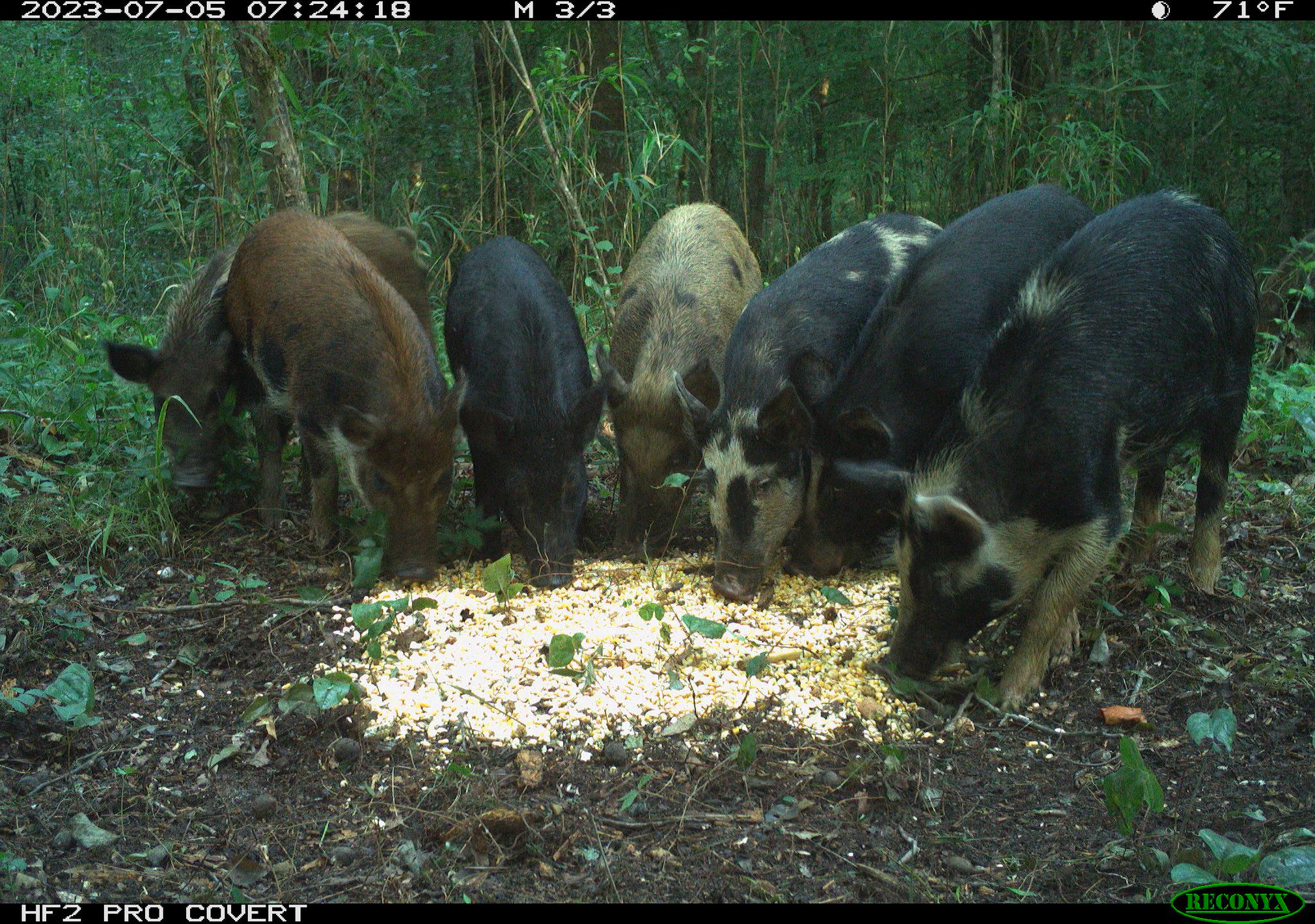
Wild pig sounder consuming bait at bait site. (Photo courtesy: Sydney Brewer and James Beasley)
Although bait is one of the most widely used tools for managing invasive wild pigs, its success depends on something that has long frustrated wildlife managers: getting pigs to find it in the first place. Some bait sites are discovered almost immediately, while others remain untouched, even in areas where pigs are known to be active. For managers relying on bait to trap, monitor, or remove wild pigs, knowing why those differences occur could make management efforts more effective and resources go further.
Researchers have tested different bait types, scent attractants, and deployment methods for years, but relatively little research has examined the factors that determine whether pigs locate a bait site. Seeking to answer that question, researchers from the University of Georgia’s Savannah River Ecology Laboratory (SREL) and Warnell School of Forestry and Natural Resources, in collaboration with the U.S. Department of Agriculture’s National Wildlife Research Center, examined how bait placement, presentation, and social behavior influence bait visitation by individual wild pigs.
Led by Sydney Brewer while completing her master’s degree at UGA, the study offers new insight into the behaviors that shape bait visitation and guides wildlife managers who depend on bait to support trapping, toxic baiting, disease surveillance, and population monitoring.
“Wild pigs are extensively managed in their native and invasive range, with the goal of population reduction or eradication due to their damage to native and anthropogenic ecosystems. Wild pig management includes trapping, aerial gunning, toxic baiting, and free ranging all rely on or are improved by bait sites,” states Brewer. “Bait is expensive, and it takes time and personnel to maintain bait sites; therefore, managers are seeking ways to be the most efficient. Results from our research can directly inform managers on how to most effectively attract wild pigs to a site for management purposes to aid in the reduction of this invasive species and mitigation of their damage.”
Sydney Brewer sits with an anesthetized GPS collared wild pig. (Photo courtesy: Sydney Brewer).
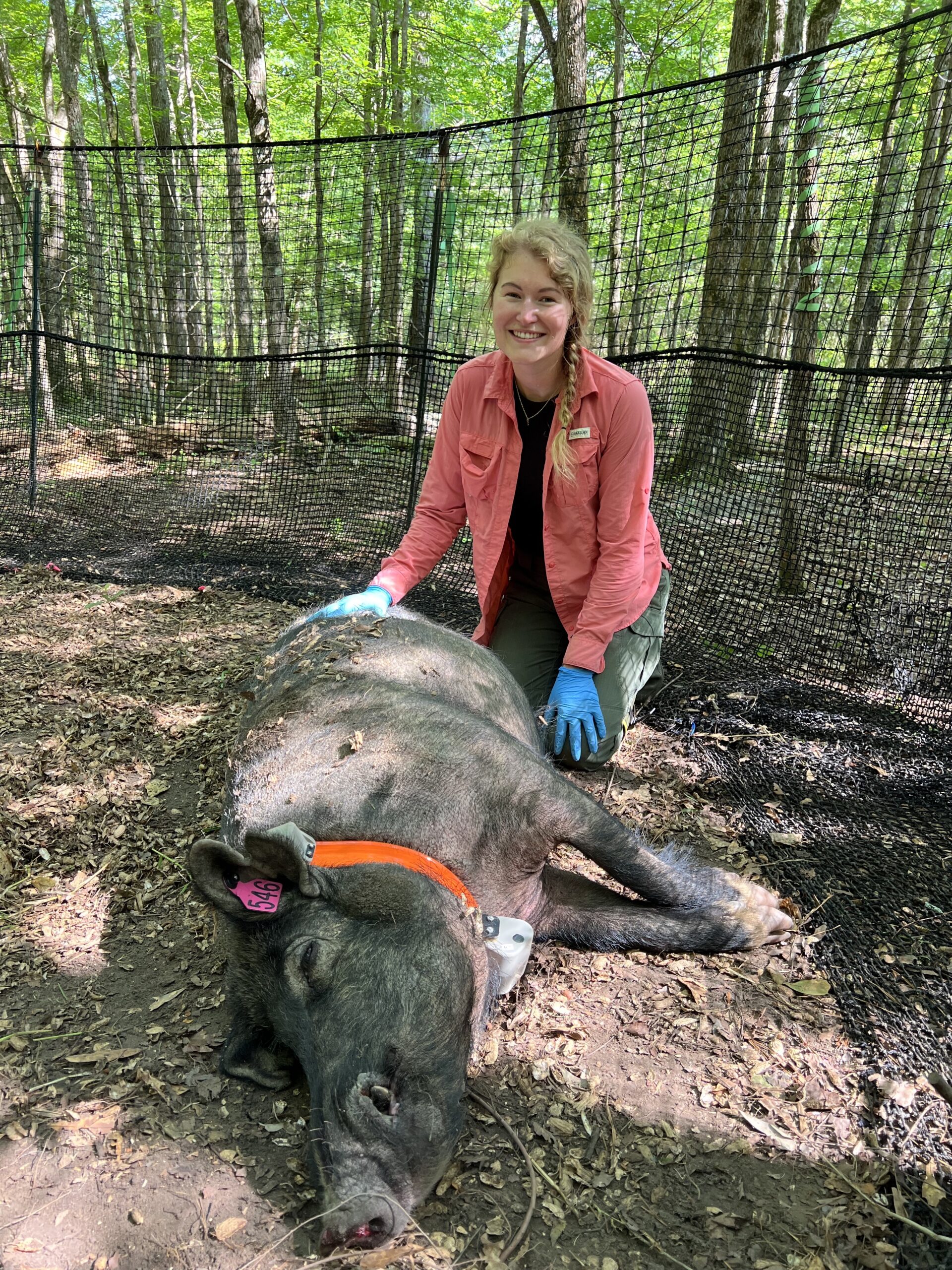
To separate the effects of different baiting strategies, researchers fitted 52 wild pigs with GPS collars at the Savannah River Site (SRS) in South Carolina and conducted 325 experimental baiting trials over nearly two years. During each trial, a collared pig was monitored at a single bait site, allowing researchers to compare bait placed in different portions of the animal’s home range and to evaluate whether bait presentation (in a central pile or a pile with radiating trails of bait) or a commercially available sow-in-heat scent attractant influenced visitation.
By comparing each of those factors, one pattern became clear. Even when bait was placed within a wild pig’s home range, pigs visited only 42% of bait sites, highlighting how difficult it can be to get pigs to locate bait in the first place. Bait placement had a greater influence on visitation than any other variable researchers evaluated. Wild pigs were 30.6% more likely to visit bait placed within the areas they used most frequently, and they reached those sites much sooner than bait located near the edges of their home ranges. Researchers also found that pigs became less likely to find bait as the distance between the animal and the bait site increased, reinforcing that understanding how pigs use their home range is more important than changing the way bait is presented.
“Despite the numerous baits and lures available for attracting wild pigs, this study adds to the growing body of evidence that where bait sites are placed within the landscape is more important than the specific bait or lure used for determining the probability and timing of wild pig detection,” states Beasley. “Because wild pigs are poor thermoregulators, they often concentrate their activity near wetlands or streams with dense understory vegetation. Locating bait sites in these areas, particularly where fresh tracks, scat, or other sign are present, even if not conveniently near roads, should maximize detection rates and improve trapping efficiency.”
The study also addressed a question that has practical implications for wildlife managers: can changing the baiting method improve success when placement is less than ideal?
Based on the results, the answer appears to be no. Adding a sow-in-heat scent attractant did not increase the likelihood that pigs would visit bait, and spreading corn along trails rather than placing it in a single pile offered no measurable advantage. Rather than relying on different attractants or presentation methods, the findings suggest managers are more likely to improve bait visitation by selecting locations where pigs already spend their time.
Researchers also found that the animals’ social behavior influenced bait visitation. Female wild pigs typically live in family groups, known as sounders, while adult males often spend much of their time alone and can be larger and more dominant at bait sites. During the study, females were less likely to visit bait sites after an adult male had already been there, and when they did, they generally arrived several days later. This finding indicates that social interactions among wild pigs can influence bait visitation in ways that may affect management efforts. Specifically, when dominant males are visiting trap/bait sites managers may be more effective at removing social groups if they first remove the dominant male.
“Previous research has documented that both solitary males and sounders are semi-territorial, but there was a need to understand how this behavior influences bait site visitation. Understanding that females were less likely to visit sites after an adult male visited provides important management implications,” shares Brewer. “Females and sounders are typically targeted for management activity due to their high reproductive potential. Our results suggest removal of adult males may facilitate detection of sounders at bait sites, especially in areas where males may be monopolizing access to bait.”
For wildlife managers, the practical application is straightforward. If pigs fail to visit a bait site, changing the bait or waiting longer may do little to improve success. Instead, the authors recommend placing bait as close as possible to areas where there is clear evidence pigs are currently active, using fresh rooting, tracks, wallows, and other signs of recent activity to guide site selection. If a bait site remains undiscovered after an extended period, relocating it may be a more effective strategy than leaving it in place.
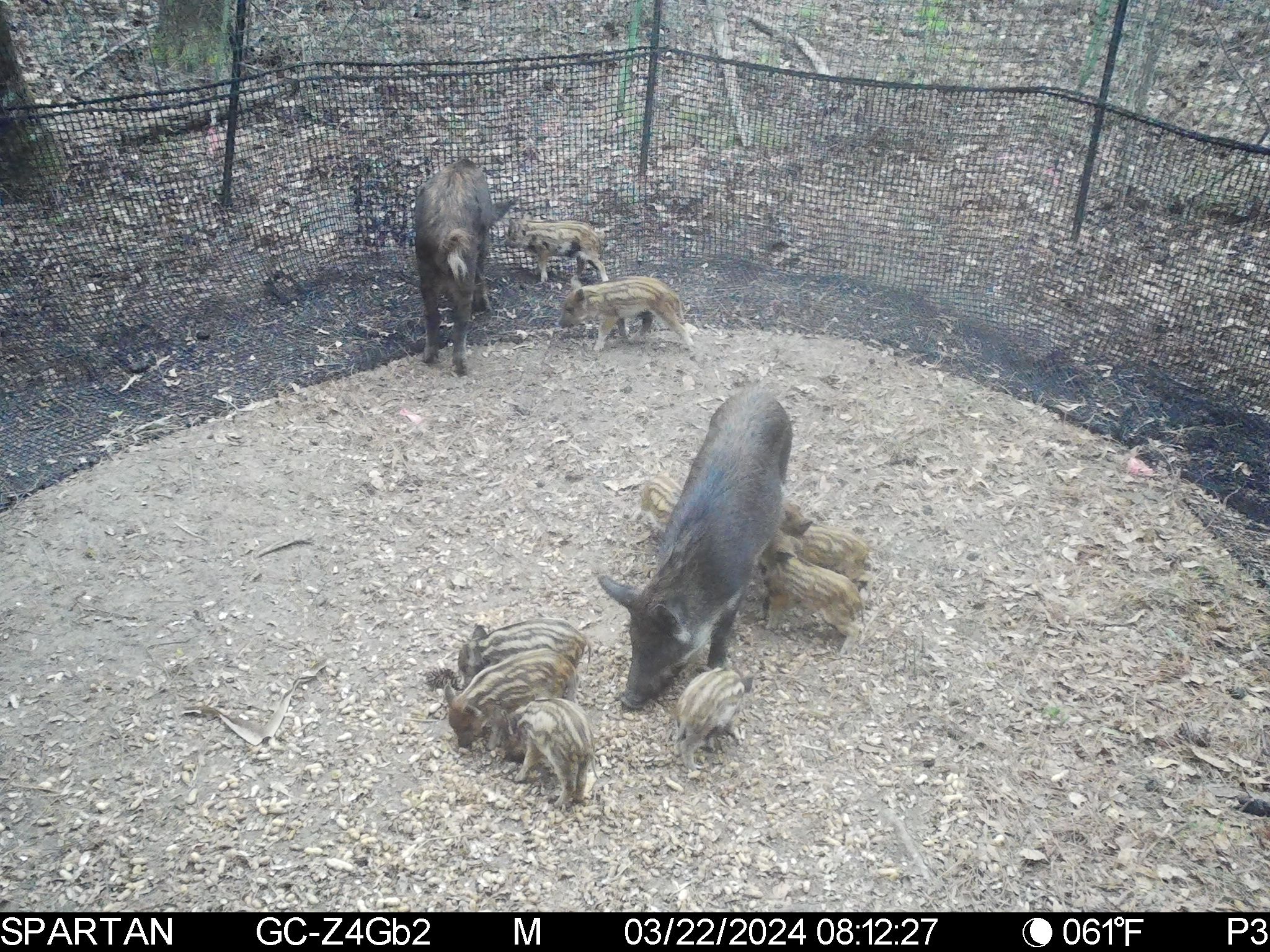
Sounder of wild pigs are seen in a trap. (Photo courtesy: Sydney Brewer and James Beasley).
While the study focused on bait visitation, its findings could extend beyond a single management technique. Trapping, toxic baiting, disease surveillance, and many monitoring programs all rely on attracting pigs to a specific location, making bait placement one of the first decisions managers face. By identifying the factors that most strongly influence whether pigs discover bait, the research provides information that can help improve a wide range of wild pig management efforts.
“The time and effort required to maintain trap and bait sites represent one of the greatest costs of wild pig management, so we hope this study will improve both the efficiency and effectiveness of wild pig management programs. Specifically, our results demonstrate that even when wild pigs are known to occur in an area, bait sites should be relocated if no activity is detected within 1–2 weeks,” says Beasley. “Because most management programs prioritize the removal of sounders to maximize population reduction, our findings further suggest that when large males discover bait sites before sounders, removing those males first may increase the efficiency of subsequent sounder trapping.”
The full study, Proximity to Bait and Social Interactions Influence Individual Wild Pig (Sus scrofa) Visitation at Bait Sites, was published in the Journal of Wildlife Management. Authors include Sydney M. Brewer, Nathan P. Snow, and James C. Beasley.