
Headlights and Hesitation: How Vehicle Lighting Affects Deer Behavior in Imminent Collision Scenarios
By Tyjaha Steele
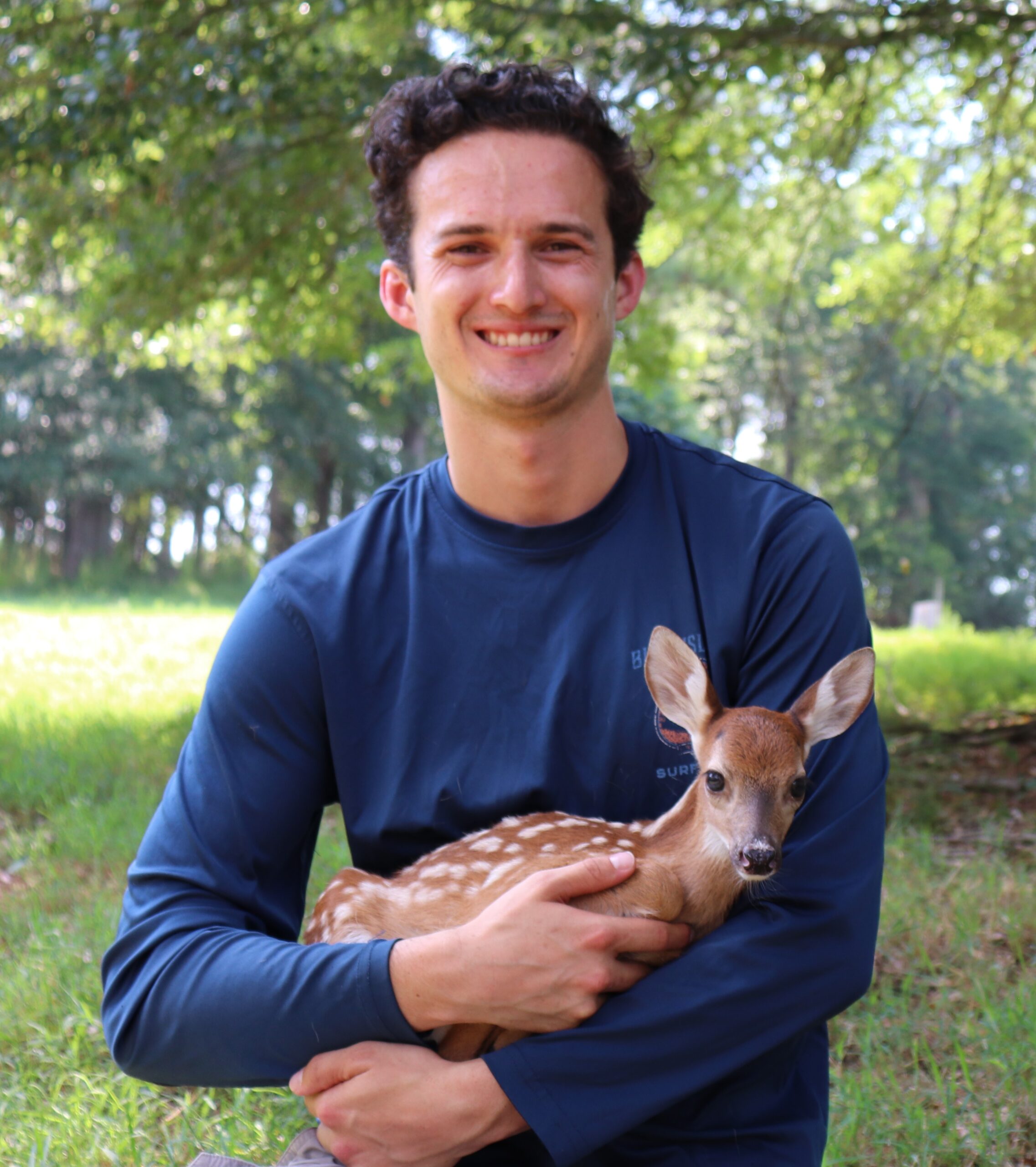
Carson is pictured with a fawn at UGA’s captive deer facility in Athens, Georgia. (Photo courtesy of Carson Pakula)
There’s a reason the phrase “deer caught in headlights” is so well-known. It captures a split-second moment with very real consequences, often at the expense of the driver and the animal themselves. With thousands of injuries and billions of dollars in damages reported each year, researchers are now asking whether changes to vehicle headlights could significantly alter how deer respond, potentially reducing the risk of collisions.
Carson Pakula, a doctoral graduate research assistant and lead author of the study, conducted 174 trials at the Whitehall Deer Research Facility in Athens, Georgia, through his work with the University of Georgia’s Savannah River Ecology Laboratory and Warnell School of Forestry and Natural Resources. The team worked with 23 captive, wild-type female deer, testing eight lighting combinations using an oncoming electric golf cart outfitted with halogen or LED headlights (set to high or low beam), with or without a rear-facing lightbar.
“We chose these eight treatments to explore how vehicle lighting might affect deer behavior by testing different headlight types, since halogen and LED give off different colors of light,” explains Pakula. “We also compared low and high beams to see if brightness changes how deer react, and added a rear-facing lightbar to find out if lighting up the front of the vehicle makes it easier for deer to notice.”
The study focused on short-range encounters, which ranged just 95 meters between the deer and the vehicle, designed to simulate the final seconds before a potential collision. Using infrared cameras, researchers tracked alert behavior, when a deer stopped or reoriented in response to the vehicle, and flight behavior, when it made an apparent attempt to escape.
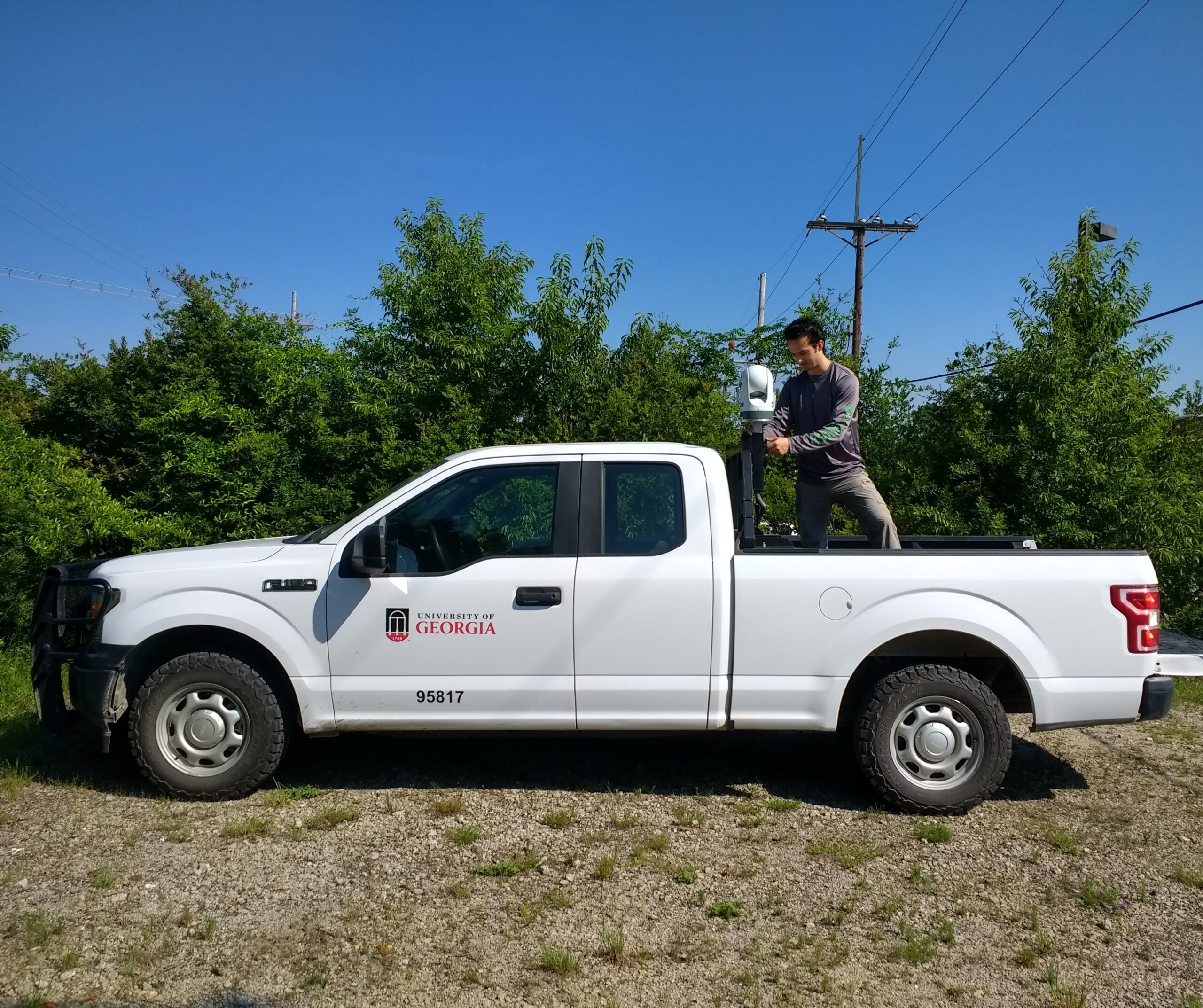
Carson is seen setting up an infrared camera on a field vehicle. (Photo courtesy of Carson Pakula)
Across all trials, deer alerted in 73% of cases and fled in just 52%. Halogen headlights on high beam with the lightbar off produced the most alerts, yet no lighting treatment reliably triggered flight behaviors.
“Many deer showed no flight behavior and stayed in the vehicle’s path, regardless of lighting treatment. It’s a ‘freezing in the headlights’ response familiar to many drivers,” says DeVault. “Deer reactions seemed driven more by individual personality than lighting. Their dark-adapted vision may not align well with modern headlights.”
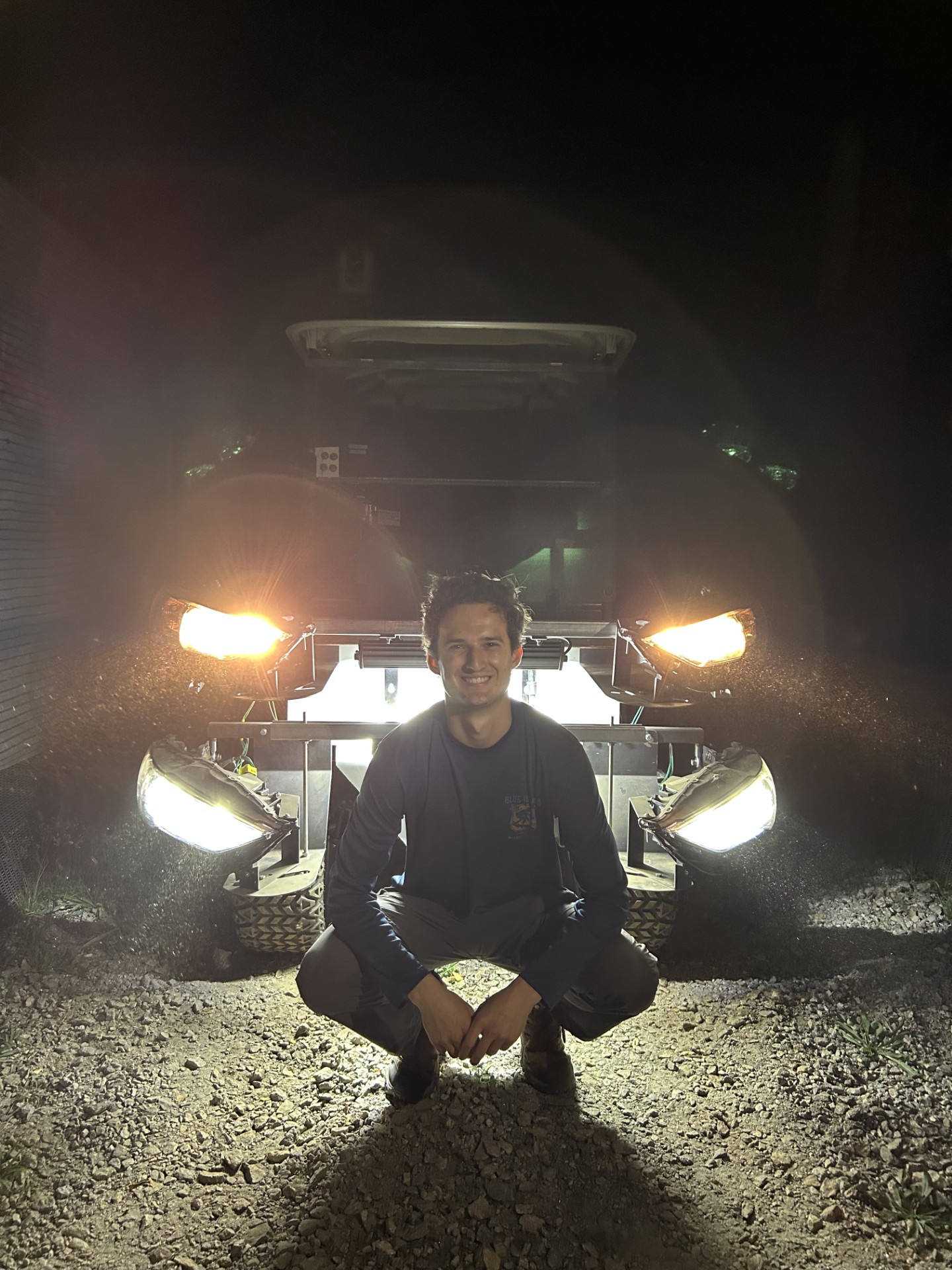
Carson smiles alongside the golf cart used to test how variations in vehicle lighting impacted deer responses to an approaching vehicle. (Photo courtesy of Carson Pakula)
This is the first study to test how vehicle lighting affects the behavior of a moving deer during an imminent head-on collision. Previous research has focused on roadside deer or longer-range interactions. These findings establish a baseline for future studies that may explore lighting effects in free-ranging deer or longer-distance approaches, especially as 86% of new vehicles are built with LED systems by default.
Although LED headlights emit blue wavelengths that correspond to what deer’s eyes are most sensitive to, halogen high beams still prompted the strongest alert responses. It’s unclear whether LED lights overwhelm the deer’s vision, mask movement cues, or simply fail to appear threatening under certain conditions.
While lighting may influence how deer perceive an oncoming vehicle, it doesn’t appear to change the outcome of a close encounter. Broader mitigation efforts, such as fencing, road design, or population control, remain more consistent and scalable solutions for reducing deer-vehicle collisions.
The full study, Caught in headlights: Captive white-tailed deer responses to variations in vehicle lighting during imminent collision scenarios, was published in Applied Animal Behaviour Science and was authored by Carson J. Pakula, Gino J. D’Angelo, Adrianna Mowrer, Olin E. Rhodes Jr., and Travis L. DeVault.