Alligators shed light on reproductive disorders
The results from the study, published in the journal Biology of Reproduction, indicate that the element of time is an essential factor.

The University of Georgia
The results from the study, published in the journal Biology of Reproduction, indicate that the element of time is an essential factor.
The gallery will depict the ongoing roles that both the University of Georgia’s Savannah River Ecology Laboratory and the USDA Forest Service-Savannah River have had in the environmental stewardship of the U.S. Department of Energy’s Savannah River Site since 1951.
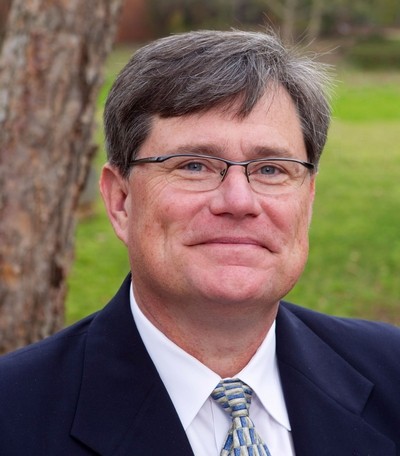 Aiken, S.C. – Olin E. Rhodes, Jr., director of the University of Georgia’s Savannah River Ecology Laboratory and professor in the Odum School of Ecology, has been named the 2018 recipient of the Caesar Kleberg Award for Excellence in Applied Wildlife Research. The annual award is given by The Wildlife Society in honor of the late Texas conservationist Caesar Kleberg.
TWS defines the award as recognizing those who have distinguished themselves in applied research and whose body of work, in both inquiry and discovery, has resulted in application of management and conservation on the ground.
Rhodes’ research has focused on wildlife ecology and genetics, including the genetic consequences of species reintroduction programs, the use of genetic tools for addressing issues of wildlife management and conservation, disease ecology and the sustainability of wildlife species in human-dominated landscapes, to name a few.
He has published over 200 peer-reviewed journal articles, books and chapters. His previous awards and recognitions include The Wildlife Society Fellow, 2015; TWS Professional Award of Merit, 2008; and the Hoosier Wildlife Award, 2007.
Rhodes previously served as assistant director of the National Wildlife Research Center, a branch of the U.S. Department of Agriculture’s Animal and Plant Health Inspection Service in Fort Collins, Colorado. In this role he supervised over 170 research scientists and technicians working in the areas of wildlife diseases, invasive species and human-wildlife interactions in agricultural ecosystems.
Prior to the position with USDA, Rhodes was a professor in the Department of Forestry and Natural Resources at Purdue University. He also served as director of Purdue’s Interdisciplinary Center for Ecological Sustainability.
Rhodes received a doctorate degree in wildlife ecology from Texas Tech University and a master’s degree from Clemson University.
The award, which includes a medal and monetary gift, was given at TWS’ recent 25th Annual Conference in Cleveland, Ohio.
Contact: Vicky L. Sutton-Jackson, 803-725-2752, vsuttonj@srel.uga.edu.
###
“…Our focus is to help people understand the process, and use the data from their community to help them understand the larger picture.”
Despite predation risks at the release site, survival rates were higher than survival reported for their wild counterparts, according to Quinn, a graduate student at SREL and Warnell during the research.
SREL helped in winning this grant for Allendale by offering to provide its existing education outreach programs for Allendale students,” Mets said.
As the program’s coordinator Kule will also recruit community partner organizations with the goal of increasing the program’s reach.
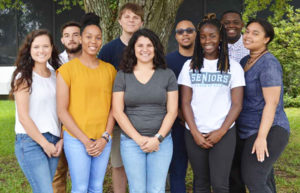
Aiken, S.C. – Eight students recently joined the long list of undergraduates to receive advanced hands-on training at the University of Georgia’s Savannah River Ecology Laboratory on the Savannah River Site.
The students are engaged in a 10-week Research Experience for Undergraduates funded by the National Science Foundation. SREL’s program offers undergraduates a unique opportunity to study radioecology, studying the fate, transport and effects of radioactive elements in the environment.
The summer program includes intense training in protocols for working in radiological sites, lab experience and developing a research project. The students receive guidance from a faculty or research staff mentor. They will present their research findings at a national conference at the University of Georgia in Athens, Georgia.
SREL’s 2018 undergraduate REU students are:
Trevaris Brown, Allen University; Kaiya Cain, Sierra Britt, and Christian Moreno, University of South Carolina Beaufort; Ryne Maness, Presbyterian College; Laura Stabler-Tindal, University of South Carolina Aiken; Heaven Tharp, University of Hawaii Hilo; and Fredericka Tucker, Florida A&M University.
SREL is also hosting Kristopher Weekes, a student visiting from Fort Valley University’s REU program.
To find out more about SREL’s education programs, please visit www.srel.uga.edu.
Contact: Vicky L. Sutton-Jackson, 803-725-2752, vsuttonj@srel.uga.edu
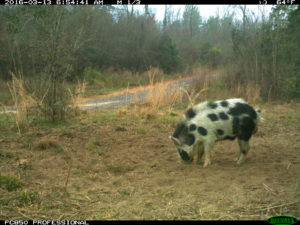
Wild pigs number between 5 and 6 million in the United States and they cause more than $1.5 billion in damage to property, agriculture, natural resources and cultural artifacts, according to the National Wildlife Research Center of the U.S. Department of Agriculture. But a group of scientists led by a researcher from the University of Georgia has a plan for gaining control of this invasive species.
James Beasley, who heads a research subcommittee of the National Wild Pig Task Force, presented the subcommittee’s recommendations in a study published in the Journal of Wildlife Management.
Although there is existing research on wild pigs—descendants of the domestic pig and the wild boar—the growth of the population has outpaced the research, according to Beasley.
“We lack the empirical data in many areas to direct and evaluate management of the species,” said Beasley, assistant professor at the Savannah River Ecology Laboratory and the Warnell School of Forestry and Natural Resources.
Focusing wild pig research on a few targeted areas under these priorities will facilitate progress toward the national goal, he said.
Kurt C. Vercauteren, project leader at USDA’s NWRC and a member of the subcommittee, agrees.
“Research addressing the priorities laid out in this manuscript will provide the knowledge needed to reduce the populations and negative impacts of invasive wild pigs,” he said.
The subcommittee’s recommendations included exploring factors influencing reproductive rates, determining how groups of wild pigs—known as sounders—form and interact, and determining why the sizes of these groups vary in different parts of the country.
Beyond the structural damage that occurs to property, very little is known about the damage done to natural ecosystems. Beasley said the research needs to determine or quantify the cost to native species that may be in competition with wild pigs for access to habitat and food resources.
Developing species-specific pharmaceuticals and improved bait and trap mechanisms that do no harm to other species is also key to seeing improved management results, according to the subcommittee.
The group also said that illegal transportation of wild pigs by humans to areas where they did not previously exist is a huge factor and influence in the wild pig’s dominance of the landscape.
“A major motivation underlying the relocation issue is hunter’s demand for wild pigs as game,” according to Beasley. “However, an unintentional consequence of the movement of pigs is the damage they inflict on crops and other resources, which has a significant impact on farmers’ wallets,” he said.
There is also a lack of knowledge that the species spreads diseases like brucellosis, E.coli. and other diseases that affect humans, livestock and native wildlife, like the Florida panther.
A major key to turning this around and improving management of the species is educating all stakeholders and measuring the effectiveness of outreach and education.
“Ultimately, the goal is to reduce damages caused by this destructive invasive species,” Beasley said. “And this template is a mechanism to get us there, hopefully within the next 5 to 10 years.”
Additional authors on this study include Stephen S. Ditchkoff and Mark D. Smith, School of Forestry and Wildlife Sciences at Auburn University, Auburn, Alabama, 36849; John J. Mayer, Savannah River National Laboratory, Savannah River Nuclear Solutions, LLC, Savannah River Site, Aiken, South Carolina, 29808.
###
Writer: Vicky L. Sutton-Jackson, 803-725-2752, vsuttonj@srel.uga.edu
Contacts: James C. Beasley, 803-725-5113, beasley@srel.uga.edu