
Four new faculty join SREL
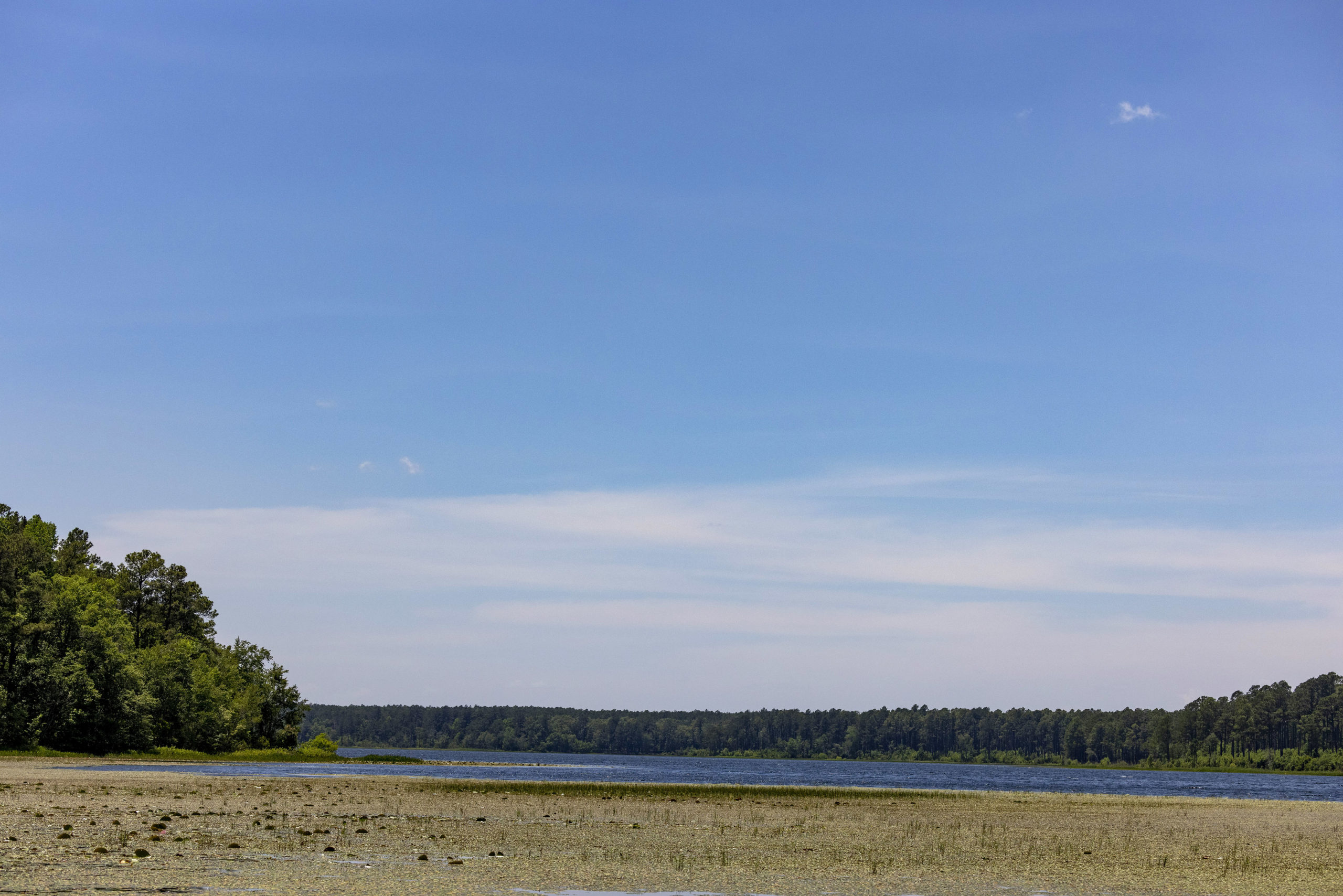
Floating vegetation on a lake at the Savannah River Ecology Laboratory (SREL).
Four faculty have joined the staff of the University of Georgia’s Savannah River Ecology Laboratory near Aiken, South Carolina.
Avishek Dutta, Brennan O. Ferguson, Daniel Kaplan and Daniel A.H. Peach will expand the SREL’s research, graduate education program and external research partnerships.
Dutta and Ferguson are in the Department of Geology at the Franklin College of Arts and Sciences. Peach is faculty in the Department of Infectious Diseases in the College of Veterinary Medicine. Kaplan is a senior research scientist at the SREL.
Dutta, an assistant professor in geomicrobiology, will investigate microbial transformation of contaminants in the environment. He earned a Ph.D. in bioscience from the Indian Institute of Technology in Kharagpur, India. Dutta previously worked as a postdoctoral researcher at the Scripps Institution of Oceanography at the University of California, San Diego.
Ferguson, an assistant professor in environmental geochemistry, will investigate the transport or movement of contamination in subsurface soil using lab and field experiments. She earned a Ph.D. in environmental engineering and earth sciences from Clemson University. Ferguson previously worked as a graduate research assistant at Clemson. She has extensive experience in community outreach.
A senior research scientist in biogeochemistry, Kaplan earned his Ph.D. at the UGA while working as a technician at the SREL. He is interested in terrestrial environmental carbon chemistry and the transport and fate of radioactive elements in groundwater and soil.
Drawing from his previous position as an advisory scientist, at the Savannah River National Laboratory on the U.S. Department of Energy’s Savannah River Site, Kaplan is well equipped in his new role as an associate director for the University of Georgia Research Institute. UGARI is the administrative unit that secures research partnerships with federal mission agencies, such as the Department of Energy and the Department of Defense.
Peach is an assistant professor of mosquito ecology and infectious diseases. He earned a Ph.D. in biology from Simon Frazer University in Burnaby, British Columbia. Most recently, Peach was a postdoctoral fellow at the University of British Columbia. He has extensive experience in outreach education and mentoring undergraduates. He will investigate mosquitos as hosts of vector-borne diseases.
Dutta will be located in Athens, Georgia. Ferguson, Kaplan and Peach will be located at the SREL.
SREL to host 2022 EEASC Conference
The University of Georgia’s Savannah River Ecology Laboratory will host the Environmental Education Association of South Carolina’s annual conference at the UGA SREL Conference Center from June 9-11.
A non-profit organization, EEASC, invites teachers and environmental educators to attend their professional development conference. The conference is for anyone who teaches others about environmental stewardship, including classroom teachers and informal educators, like park rangers and nature center interpreters.
The theme of this year’s conference is “Educating Outside the Box.” Whit Gibbons, professor emeritus at SREL and the Odum School of Ecology and author, will be the keynote speaker. Additional speakers include SREL’s Linda Lee, Sean Poppy and Judy Greene, retired outreach educator.
Holly DeVault, project coordinator at SREL, is co-chair of the event. SREL is a sponsor.
To obtain registration information and more, please go to the conference website: https://eeasc.org/conference.
Dharmarajan Heads Home to India
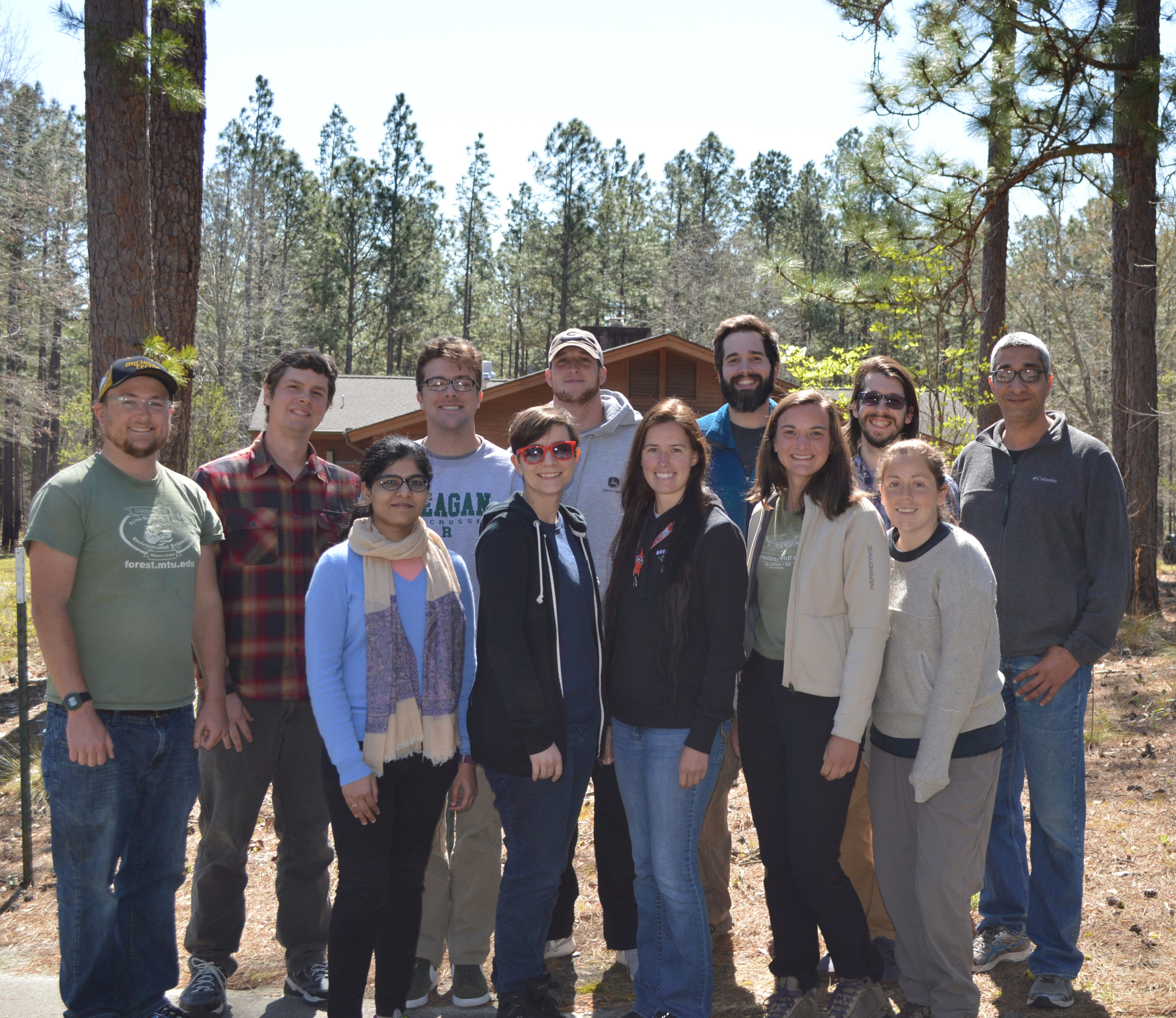
Guha’s lab, including his graduate students and technicians at the SREL conference center.
By P.J. Perea
For over five years, SREL was fortunate to have Guha Dharmarajan, an expert in disease ecology, on its faculty. As the year 2021 counted down, Dharmarajan, who was an assistant research scientist at the lab, packed up his office and his belongings to head home to India.
Impact in the lab and in the field
Dharmarajan investigated vector-borne diseases. He examined the interactions of Asian tiger mosquitos with avian malaria in birds, opossum spatial ecology and rabies in raccoons.
In addition to bringing a unique skill set to the lab, Dharmarajan enriched the lives of his students — David Bernasconi, Wes Dixon, Pooja Gupta, Erik Neff, and Manette Tanelus.
Gupta, a bioinformaticist at the Utah Public Health Laboratory in Salt Lake City, began as a doctoral student at SREL in 2016. She studied avian malaria in the tropical sky-islands of the Western Ghats, India. Gupta describes her learning experience under Dharmarajan as all-encompassing.
“I learned how to order things, set up the lab, and train technicians.” Gupta said. “ It was a great experience for me.”
David Bernasconi, a research data coordinator at the Pacific States Marine Fisheries Commission in Idaho, began working at the lab in 2016. He became a master’s student under Dharmarajan the following year. Bernasconi said he experienced a tremendous amount of growth working with Dharmarajan.
“My time with Guha at SREL was probably one of the more informative periods of my adult life. From a professional standpoint, I grew substantially. Many of the skills he imparted to me, I still use today. In particular, when presenting to research partners, he made sure that I had the data ready and summarized to answer any question,” Bernasconi said. “I carry this level of preparation into meetings with stakeholders every day. It’s benefited me substantially.”
Dixon was also a master’s student under Dharmarajan. Starting at SREL in 2018, he had an opportunity to conduct research that maximized wildlife surveillance techniques to improve management of disease outcomes.
“The experiences and skills I learned working with Guha Dharmarajan have been invaluable. Before I arrived at the lab, I had never worked with needles, chemically immobilized animals, or trained other people,” said Dixon. “It’s a cool feeling to have so many new skills pertinent in my field.”
Erik Neff, who began the same year as Dixon, studied mosquito ecology and evolution. Working on his M.S. degree, he focused on the mosquito-canine heartworm system. Neff attributes Dharmarajan with preparing him for his current role as the chief scientific officer at Fluker’s Cricket Farms in Port Allen, Louisiana.
Presently at Virginia Tech, Tanelus spent the summer of 2017 at SREL in the NSF’s Research Experience for Undergraduate Program and later returned to the lab to work. Dharmarajan inspired her to pursue a career in infectious diseases.
“As an undergraduate student and technician in Guha’s lab, I learned a lot about mosquitoes, parasites and arthropod-borne pathogens,” Tanelus said. “He wrote a letter of recommendation for me, which led me to the lab where I will be pursuing my Ph.D. Guha has made an incredible impact in the lives of many students.”
SREL’s former disease ecologist is delighted the lab will continue research in disease ecology.
Future plans
Traveling with his pet cat in tow, a new journey is truly beginning for Dharmarajan. After he and the cat get over jet lag (that might take a while), he has no plans to rest. His plans are to teach and conduct research at a small liberal arts college near his family in India.
“It’s been a great ride working with my graduate students and technicians, but I had to reassess what is important because of COVID-19,” he explained. “I wanted to be closer to my family, if they should need me.”